


Brought to you by Murphy of Ireland.
The Aran sweater, also known as the Aran jumper, is one of the most enduring symbols of Irish heritage. Originating from the Aran Islands off the west coast of Ireland, these intricately knit garments are more than just clothing—they are tangible expressions of a rugged landscape, a resilient people, and a tradition of craftsmanship that has spanned generations. Over time, the Aran sweater has evolved from a practical fisherman’s garment to a global fashion staple, admired for its beauty, quality, and cultural significance.
Origins on the Edge of the Atlantic
The story of the Aran sweater begins in the windswept Aran Islands—Inishmore, Inishmaan, and Inisheer—located at the mouth of Galway Bay. Life on these islands has always been defined by the elements: the fierce Atlantic winds, salty sea spray, and chilly temperatures demanded clothing that could provide warmth, durability, and water resistance.
Though it is commonly believed that Aran sweaters have ancient Celtic origins, the Aran sweater in its iconic form likely emerged in the early 20th century. Some textile historians date the first true Aran sweaters to around the 1890s to 1920s, when Irish women, influenced by both traditional cable patterns and imported knitting techniques from Scotland and Guernsey, began developing uniquely Irish designs.
A Language of Stitches
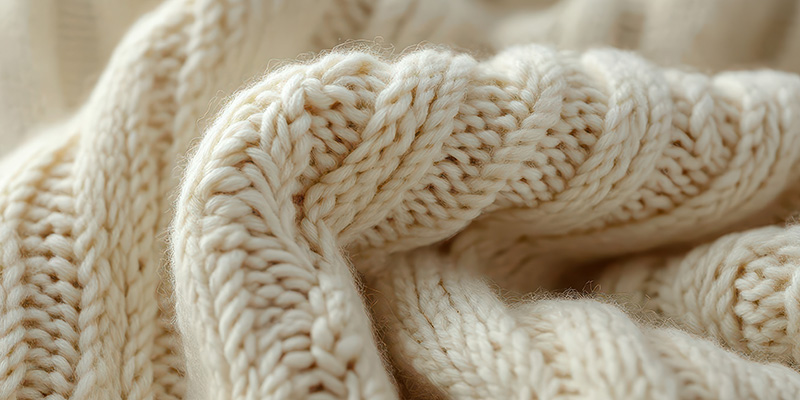
What sets the Aran sweater apart is its richly textured surface, composed of complex stitch patterns, each of which carries a symbolic meaning. These designs are not merely decorative—they reflect a heritage steeped in folklore and storytelling. Each stitch told a story, conveyed a wish, or symbolised an aspect of island life.
The cable stitch, one of the most recognisable, represents a fisherman’s ropes and is said to symbolise hopes for safety and good fortune at sea.
The diamond stitch suggests the shape of the fields on the islands and is often interpreted as a wish for success and wealth.
The basket stitch is linked to the fisherman’s basket, symbolising the hope for a good catch.
The moss stitch, with its rough texture, is thought to represent growth and abundance.
These motifs varied between families and regions, giving rise to the myth—now largely debunked—that a drowned fisherman could be identified by the pattern on his sweater. While there’s little historical evidence to support this romantic notion, it has contributed to the mystique of the Aran sweater and its emotional resonance.
Craft and Tradition
The Aran sweater was traditionally hand-knitted by women using undyed, natural wool from local sheep. This wool, known as báinín, retained its natural lanolin, a greasy, waxy substance that made the garment water-resistant and ideal for fishermen braving the sea. Each sweater took weeks to make and required significant skill, not only in knitting but in understanding the complex symbolism behind the patterns.
The tradition of knitting Aran sweaters was often passed down from mother to daughter. For generations, women would knit in spare moments, often by the firelight, creating garments that were both functional and deeply personal. These sweaters were sometimes made as part of a dowry, or gifted to sons before they went to sea, adding emotional value to their practical worth.
By the mid-20th century, the Aran sweater began to catch the attention of those beyond Ireland’s shores. In the 1950s and 1960s, as Irish emigrants brought their cultural artefacts with them, Aran sweaters became fashionable in the United States and the UK. Designers such as Sybil Connolly and international publications helped catapult the sweater into the fashion spotlight. Hollywood icons and musicians—from Taylor Swift and Grace Kelly to Steve McQueen and The Clancy Brothers – were photographed wearing Aran sweaters, further boosting their appeal.
Heritage and Preservation
Today, the Aran sweater stands at the crossroads of heritage and fashion.
Organisations such as Gaeltarra Éireann in the mid-20th century and, more recently, Údarás na Gaeltachta, have played pivotal roles in preserving the knitting tradition in Gaeltacht (Irish-speaking) areas. These efforts have supported local artisans and helped maintain the cultural integrity of the craft.
Furthermore, the Aran knitting tradition was recognised as an important part of Ireland’s intangible cultural heritage. Workshops, craft fairs, and educational programs continue to promote the craft among younger generations. Many hand-knitters, both in the Aran Islands and throughout Ireland, are still dedicated to preserving the original methods—using natural wools, hand-finishing techniques, and authentic patterns passed down through the generations.
A Mark of Quality
What distinguishes an authentic Aran sweater is not just its cultural significance, but its exceptional quality. Hand-knit Arans are densely constructed using high-quality wool, offering both insulation and breathability. The natural lanolin in untreated wool makes them moisture-resistant—ideal for wet climates. Moreover, the weight and durability of a genuine Aran sweater mean it can last for decades with proper care.
Modern iterations of the Aran sweater are available in various styles and colours, and while some are mass-produced, many companies—especially in Ireland—remain committed to ethical, high-quality production. Murphy of Ireland, with their roots in Donegal, uphold high standards of craftsmanship and often use 100% Irish wool, ensuring authenticity.
Global Appeal and Contemporary Fashion
Though rooted in rural Ireland, the Aran sweater has transcended its geographical and cultural boundaries. In recent decades, it has been reimagined by luxury fashion houses such as Alexander McQueen, Dior, and JW Anderson. These reinterpretations celebrate the sweater’s visual appeal while introducing it to new generations and markets.
Despite these modern adaptations, the core values remain: heritage, craftsmanship, symbolism, and quality. In a world of fast fashion and disposable clothing, the Aran sweater represents a counterpoint—a product of patience, skill, and continuity. Wearing an Aran sweater is not merely a fashion statement; it is a connection to a time-honoured tradition, a way to carry a piece of Irish history into everyday life.
The Aran sweater is a remarkable fusion of art, history, and utility. From its origins on the rugged Aran Islands to its place in global fashion, it tells a story of survival, identity, and creativity. Its legacy is woven into every cable, every diamond, and every stitch – a legacy that continues to evolve while honouring its past. In wearing or crafting an Aran sweater, one participates in a living tradition, one that speaks of Ireland’s enduring spirit, its dedication to craft, and its profound respect for the ties that bind people, place, and purpose. For decades now, Murphy of Ireland have been sourcing and selling the finest knit Aran sweaters and cardigans from craft producers in Ireland.